Where does a graduate go after university?
Why some graduates remain near campus, some move closer to work, and neither choice follows one universal route.
By 36 Partners5 min read

Graduation is sometimes presented as a simple rental pipeline: students finish university, find a job and move into a city-centre apartment. Real lives have more moving parts. Some graduates stay in shared housing. Others return home, leave the city, move in with a partner or take a job whose commute makes a different neighbourhood practical. For a property investor, the question is not how many people attend a university. It is what kind of home someone can afford and will want after leaving it.
The Higher Education Statistics Agency publishes graduate outcomes, including employment and further study. Such information gives broad context. It does not establish that a given share of graduates will rent privately in the same city, let alone in a particular new-build scheme. Numbers reported for university attendance cannot be copied into a rental-demand forecast.
The first move is about trade-offs
A first salary may make privacy appealing but still leave a tight monthly housing budget. Someone who loved walking to lectures may now need a bus or train to an employer on the other side of the region. A friend group may keep a graduate near familiar streets even when another postcode offers a shorter commute. Furnishing, broadband, energy costs and the security deposit can matter as much as the advertised rent.
An investor should test affordability against the tenant group they imagine. Would a graduate paying this rent still manage travel and ordinary living costs? Is a one-bedroom apartment competing with a room in a well-located shared house? The cheapest monthly option may not be the best value for the tenant, but neither can every new-build finish command an unlimited premium.
Manchester, Salford and Liverpool are not one campus
Manchester’s higher-education institutions sit across different parts of the urban area; graduate jobs can be in the centre, Salford, Trafford or further afield. Liverpool’s universities and employment areas likewise create more than one journey pattern. A property near a university may appeal to graduates, but many will place their workplace and social life above proximity to the lecture theatre they no longer use.
In Manchester and Salford, Waterhouse Gardens at Dutton Street and Obsidian around Trinity Way have different delivery stages and immediate settings. A renter’s decision will involve the specific unit and its connections, not just a broad ‘graduate market’. In Liverpool, The Gateway and SoapWorks are Pumpfields schemes that should be considered alongside other central and city-fringe options. These are listed partner developments, not student housing built by 36 Partners.
What happens after the first tenancy?
The graduate market is dynamic because households change. A tenant may take a new job, seek a larger home or move in with a partner. Some will leave; others will stay for years. A flexible floorplan, sensible storage and reliable building management can make an apartment useful across several life stages. An investor should not have to depend on one narrowly imagined first-job renter to make the letting case work.
Check the area outside term time as well as during the academic year. A neighbourhood used by a wide mix of residents and employers can feel different from one shaped almost entirely by a campus calendar. Neither is automatically better, but the distinction matters when assessing year-round demand and the likely competition.
Transport is again practical rather than decorative. Visit the scheme, then travel to likely employment areas at times a tenant might actually commute. Notice whether walking routes are comfortable at night and how much time a change adds. A location with several realistic job connections may suit more renters than one relying on a single destination.
Following the person, not a statistic
A useful approach is to write down a plausible renter’s monthly budget, schedule and preferences, then compare the home against available alternatives. Check current rents, furnishing and running costs rather than assuming a student becomes a tenant of a premium apartment immediately after graduation. University presence is one part of a city’s appeal, not a guarantee of occupancy.
Our Manchester and Salford and Liverpool guides offer a starting point for the area comparison. Speak to our team if you would like to examine a specific listed apartment and the variety of people it might realistically serve.
What to watch in a neighbourhood
Look at the employment mix reachable from an apartment, not only the distance to a campus. If graduates can reach multiple employers and amenities without a difficult commute, the home may have a broader appeal as careers change. Speak to local letting agents about the actual applicants they have seen for comparable homes, then check what those homes are asking and offering. Treat an agent’s view as a lead for investigation, not a guaranteed occupancy forecast.
Pay attention to lease restrictions and building rules when targeting professional tenants, especially around sharing and short-term letting. A theoretical renter profile is irrelevant if the lease does not permit the proposed use. Compare the apartment’s practical space and monthly cost with the alternatives available to a first-job household before projecting rent.
Source: Higher Education Statistics Agency, graduate outcomes. This article does not infer scheme-level rental demand from university enrolment. Cover image is illustrative.
Seasonality matters when setting expectations. A new job can begin at any time of year; not every prospective tenant searches immediately after graduation. If a flat becomes available outside a busy moving period, it may take longer to find the right applicant. Budget for that possibility and assess local employment patterns alongside university presence rather than treating an annual student intake as a letting guarantee.
This article is for general information only and does not constitute financial advice.
Related developments
Related Developments

Waterhouse Gardens
Dutton Street, Manchester M3
0.0%
gross yield on achieved 1-bed rents
Prices from £330,000
- Built and ready to occupy — no construction wait
- Pool, spa, cinema and 2,500 sq ft gym on site
- 7 min walk to Victoria Station

The Gateway
Pumpfields, Liverpool
0%
projected NET rental return
Prices from £354,950
- 6% projected NET rental return
- Completing Q1 2027
- Garden Spa, sky lounge and skybridge floors

SoapWorks
Pumpfields, Liverpool
Rental figures available on enquiry
Prices from £329,950
- Current availability and pricing available on enquiry
- Apartments in Liverpool's Pumpfields district
- Spa, cinema, gym and rooftop terraces
More from News

City Stories
Salford’s second act: what lies beyond MediaCity?
MediaCity is an established anchor, but Salford’s neighbourhoods have distinct stories and different delivery stages.
21 August 2026 · 5 min read
Read article
City Stories
The neighbourhoods nobody was talking about five years ago: Liverpool
The Baltic Triangle, Knowledge Quarter and North Docks reveal three very different ways a city can change.
7 August 2026 · 5 min read
Read article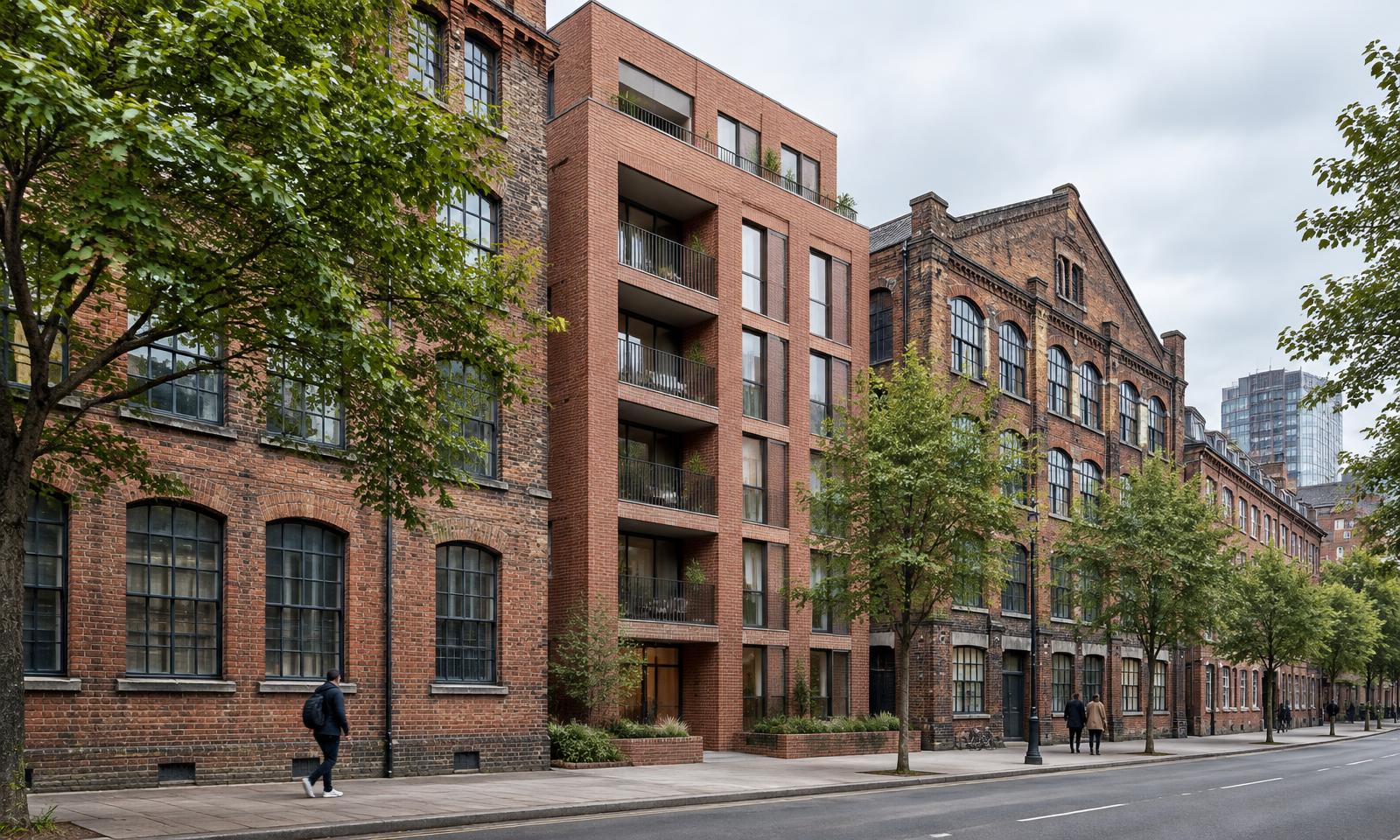
City Stories
What happens when a city runs out of space?
Cities do not stop growing at a boundary; they reuse land, build higher and connect to neighbouring districts.
4 June 2026 · 5 min read
Read articleSpeak to our team
Want to explore property investment opportunities?
Speak to the 36 Partners investment team.