Can one building change a neighbourhood?
From Bramley-Moore Dock to MediaCity, the anchor effect is useful shorthand—but a poor substitute for looking at daily life.
By 36 Partners5 min read
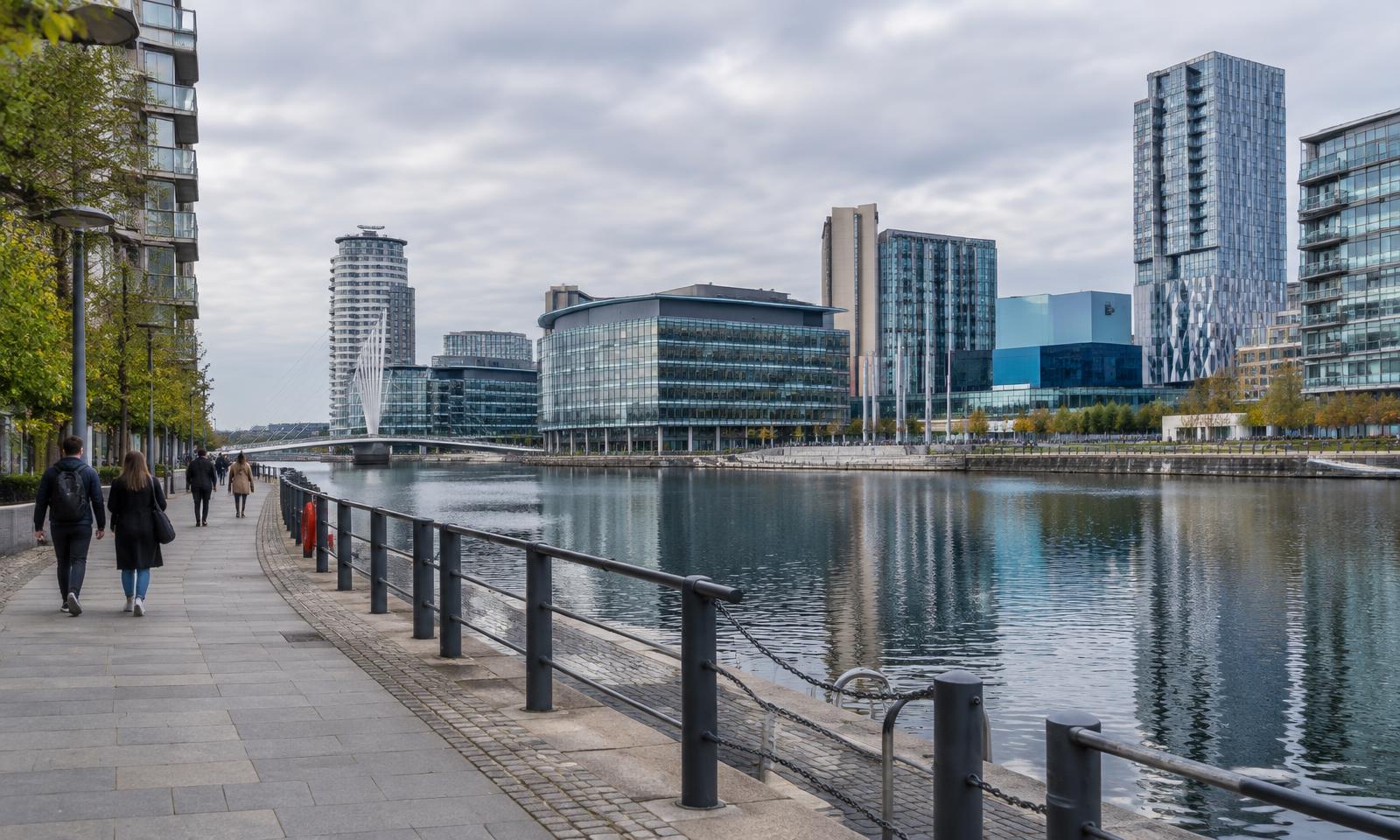
Big buildings make easy before-and-after pictures. A stadium appears where a dock once stood; a media campus brings new jobs and a new name to a waterfront. It is tempting to draw a straight line from landmark to higher rents. Real neighbourhoods rarely move in straight lines.
An ‘anchor’ can change how people perceive a district. It can draw visitors, businesses and investment toward an address that previously felt peripheral. But the strength of that effect depends on what happens outside the anchor’s doors. A lively venue with empty streets around it is not the same as a neighbourhood in which people can comfortably live, work and spend an ordinary Tuesday.
What a landmark can—and cannot—do
Everton’s stadium at Bramley-Moore Dock is a prominent element in the Liverpool Waters northern docks story. The club and the waterfront developer have described it as a catalyst for broader activity. ‘Catalyst’ is a useful word, provided we remember it describes a hoped-for chain of events, not a measured uplift in the value of every nearby flat. Football brings intense activity on particular days. Rental demand depends on a more consistent set of reasons to choose an address.
Those reasons include employment, transport, lighting, public space, schools and useful local shops. They also include less photogenic matters: a clear route across a busy junction, somewhere to buy groceries, and a building with manageable running costs. Visitors may tolerate an awkward journey once a fortnight; a tenant faces it repeatedly. That distinction is central to an investor’s assessment.
On the other side of the North West, MediaCity and Salford Quays show how a major employment and cultural cluster can become an established part of a place. MediaCity is in the City of Salford, not within Manchester City Council’s boundary. Its present-day restaurants, venues, workplaces and homes are observable. Proposed phases of expansion remain plans until delivered.
The middle years matter most
It is easy to compare a faded ‘before’ photograph with a polished ‘after’ image. Investors live through the years between them. Construction can interrupt views and routes. Shops may arrive only after enough residents move in. A planned office building may be delayed while a new residential phase proceeds. None of this rules out an investment, but it changes the likely experience of the first tenants.
To understand an anchor effect, ask three separate questions. First, what has opened and is operating now? Second, what additional development has permission and credible funding? Third, what remains an aspiration in a framework or marketing plan? An answer to the third question cannot be used as though it were the first.
An anchor may also make a district more expensive to enter. If a stadium or campus has already received years of coverage, sellers may have priced its anticipated benefits into asking prices. The investor still needs to compare the proposed rent against genuine alternatives and account for the building’s costs. Buying beside a landmark is not the same as buying a good apartment at a good price.
From the regional story to a listed scheme
Our listed West One scheme is in Salford, with the wider MediaCity and Quays employment and leisure offer part of its location context. That does not make it a MediaCity development. In Liverpool, The Gateway and SoapWorks are in Pumpfields, on the city-centre side of the wider North Docks story. They are not stadium projects or Liverpool Waters plots. Each has its own developer, timetable and immediate streetscape.
That distinction protects a buyer from a common category error: borrowing the excitement of a famous project without asking how close, connected or relevant it is to the actual flat. A tenant looking near Salford Quays may value a reliable everyday commute more than a sweeping regeneration map. A Liverpool renter may prefer direct access to the centre over a speculative waterfront premium. Neither preference can be inferred from a regional headline.
What to inspect before deciding
Walk the route from the scheme to the anchor and to the nearest useful services. Check how it works outside visitor hours. Find out whether public realm improvements are complete or promised, then compare local rental listings by size, specification and age. For off-plan property, ask which neighbouring plots may be under construction at completion.
The best anchors contribute to a wider ecosystem. They can help a district acquire a recognisable identity, but they do not do the work of a whole city. If you want to compare homes around Salford and Liverpool’s changing districts, explore our Manchester and Salford guide and Liverpool guide, or speak with our team about the specifics.
The distance between attention and demand
Landmarks can put a district in the national conversation long before its ordinary services catch up. A visitor arriving for a football match may accept queues, crowds and a long walk. A resident thinking about renewing a tenancy judges those same details every week. In Salford, an established employment cluster can create a dependable reason for people to travel, but it does not imply that everyone who works there wants to live immediately beside it. Rental demand still depends on household budgets, competing homes and the journey between work and the front door.
This is why the area around an anchor deserves its own research. Identify where people enter and leave the site, where transport stops are, and which streets remain active outside the anchor’s opening hours. A development on the other side of a major road can feel much farther away than the map suggests. Likewise, a comfortable pedestrian route can connect an apartment to multiple destinations without it being directly beside any one of them.
An investor should also ask who pays for promised changes. A framework can set out an attractive sequence of public spaces and commercial uses while individual delivery remains dependent on permissions, funding and other landowners. Keep a separate list of what exists, what is being built and what has only been proposed. That discipline allows a landmark to be part of the investment conversation without letting its reputation stand in for a property-level appraisal.
Sources: Liverpool Waters, Northern Docks neighbourhood; Salford City Council, MediaCity and Salford Quays regeneration. References to landmark effects are analysis, not measured property-value forecasts. Cover image is illustrative.
This article is for general information only and does not constitute financial advice.
Related developments
Related Developments
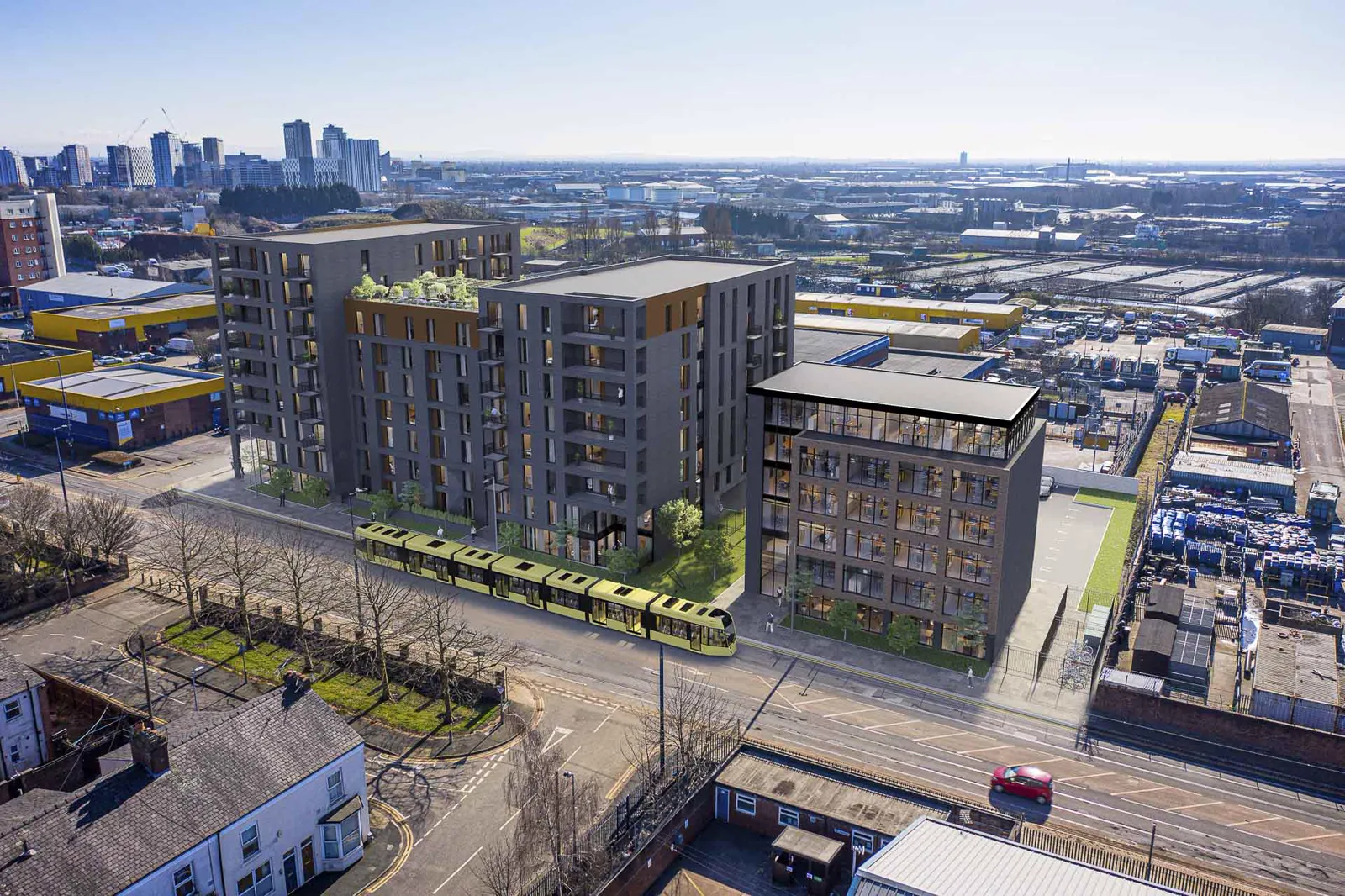
West One
Salford, Greater Manchester
Rental figures available on enquiry
Prices from £334,950
- Availability and pricing available on enquiry
- Eco-led apartments near MediaCityUK
- Minutes from MediaCityUK and Salford Quays

The Gateway
Pumpfields, Liverpool
0%
projected NET rental return
Prices from £354,950
- 6% projected NET rental return
- Completing Q1 2027
- Garden Spa, sky lounge and skybridge floors

SoapWorks
Pumpfields, Liverpool
Rental figures available on enquiry
Prices from £329,950
- Current availability and pricing available on enquiry
- Apartments in Liverpool's Pumpfields district
- Spa, cinema, gym and rooftop terraces
More from News

City Stories
Salford’s second act: what lies beyond MediaCity?
MediaCity is an established anchor, but Salford’s neighbourhoods have distinct stories and different delivery stages.
21 August 2026 · 5 min read
Read article
City Stories
The neighbourhoods nobody was talking about five years ago: Liverpool
The Baltic Triangle, Knowledge Quarter and North Docks reveal three very different ways a city can change.
7 August 2026 · 5 min read
Read article
City Stories
Where does a graduate go after university?
The move from halls to a first job is a housing story about routines, budgets and transport.
31 July 2026 · 5 min read
Read articleSpeak to our team
Want to explore property investment opportunities?
Speak to the 36 Partners investment team.